
A hot U.S. inflation report should have pushed borrowing costs higher. Instead, investors bought government bonds. Is the market looking beyond inflation toward a growth and credit shock?
October 16, 2026 · Independent market analysis · Data through October 15, 2026
The most revealing market move of the week was not a dramatic stock-market crash. It was the rally in U.S. Treasury bonds while inflation data came in far hotter than expected.
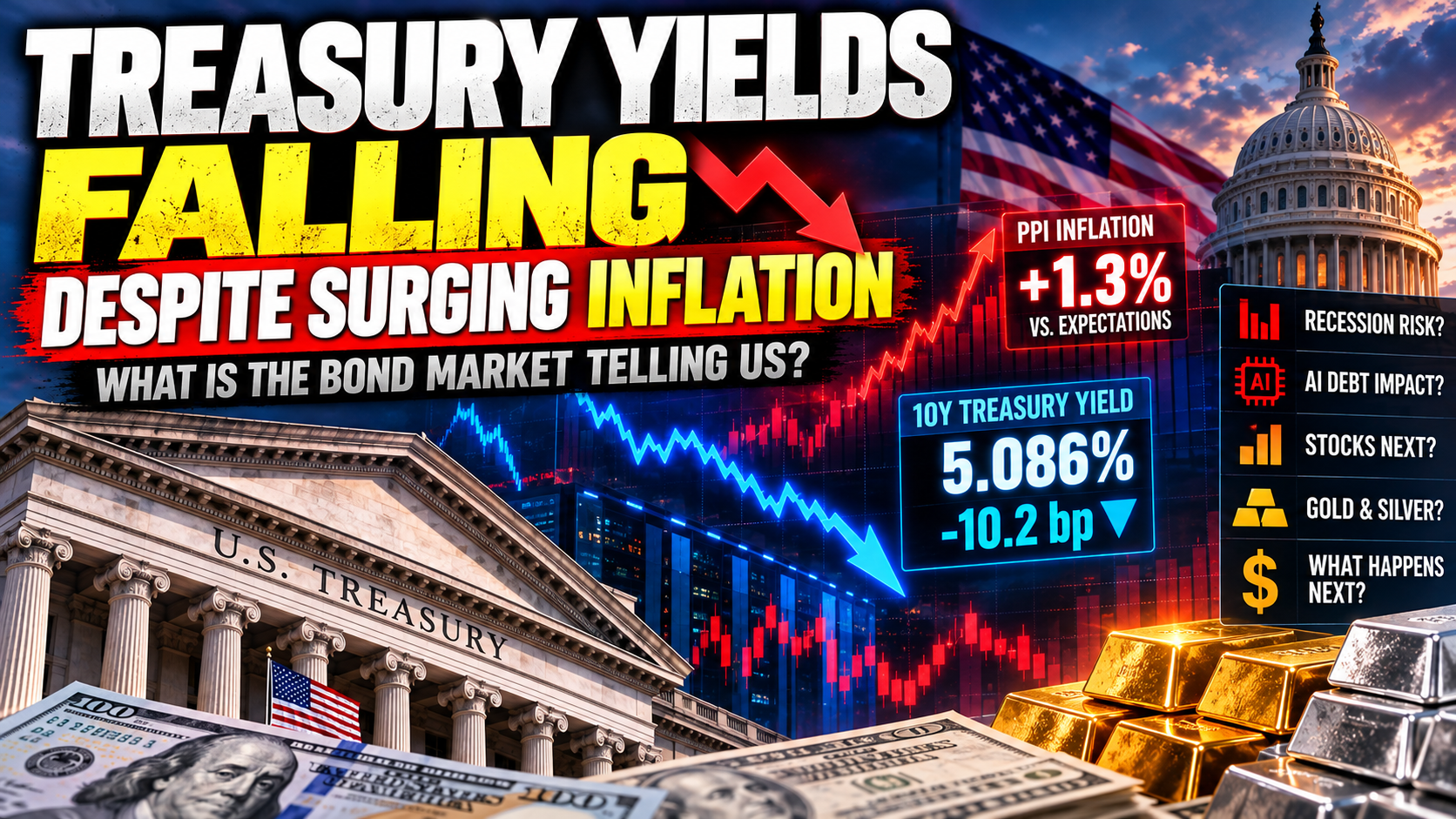
On October 15, the benchmark 10-year U.S. Treasury yield ended near 5.086%, according to The Wall Street Journal, after a sharp daily decline. Earlier in the session it touched approximately 5.038%. Yet September producer prices had risen 1.3% month over month, well above the 0.6% consensus cited by the Journal. The apparent contradiction raises a crucial question: what does the bond market fear more—persistent inflation or the economic damage from high interest rates?

1. Why This Bond Rally Was Unusual
Bond prices and yields move in opposite directions. When investors buy Treasuries aggressively, their prices rise and their yields fall. Ordinarily, an upside inflation surprise increases concern about Federal Reserve tightening and inflation erosion, pressuring bond prices lower. That initial reaction did appear after the October 14 consumer-price report. But the direction then reversed.
September CPI increased 3.7% from a year earlier, up from 3.4% in August and above the 3.6% consensus in a Wall Street Journal survey. The following day, producer-price inflation surprised on the upside too. Nevertheless, long-dated Treasury yields declined, indicating that forces other than the immediate inflation print were dominating bond demand.

2. Four Forces That Can Push Yields Lower Even When Inflation Is Hot

These explanations are not mutually exclusive. Reports from The Wall Street Journal and Reuters described growing concern about the consequences of expensive borrowing, particularly for debt-funded AI infrastructure. But a single session cannot establish which factor contributed the most. Nor does a falling yield automatically predict recession.
3. The Credit-Market Connection: Why AI Infrastructure Matters
The AI buildout depends on enormous spending on graphics processors, electricity, land, cooling and data centers. Many infrastructure operators must pay substantial costs before they receive the full cash flows expected from long-term contracts. High rates can make that financing more expensive and more difficult to refinance.
This is where the Treasury rally intersects with the credit market. A bond investor can simultaneously believe inflation is stubborn and fear that high interest rates will eventually damage corporate balance sheets. If investors reduce exposure to leveraged companies, Treasury prices can rise even as the inflation outlook remains uncomfortable.

4. A Warning, Not Proof of an Imminent Recession
There is an important counterargument: the economy has not uniformly weakened. September retail sales rose 0.8%, according to reporting on the October 15 data. Investors may also be buying bonds because yields around 5% are attractive after the prior selloff. Stabilizing oil prices can reduce some inflation pressure at the margin.
It is therefore too strong to claim that the bond market has conclusively priced in recession. The defensible interpretation is narrower: the market has become more sensitive to the possibility that high borrowing costs could eventually overwhelm economic resilience.
5. What the Move Means for Stocks, Gold and Silver

For investors holding physical silver, the distinction matters. Silver is both a precious metal and an industrial input. A falling Treasury yield is not, by itself, a bullish signal for silver. The reason for the yield decline—and the outlook for manufacturing demand—may matter more.
6. Three Scenarios for the Next Six Months

7. Five Indicators Investors Should Watch
First, inflation expectations and real Treasury yields: a decline in nominal yields driven by lower real yields is different from one driven by lower inflation expectations. Second, high-yield and investment-grade credit spreads: widening spreads would strengthen the financial-stress interpretation. Third, payrolls and unemployment: deterioration would validate concerns about growth. Fourth, Treasury auction demand and fund flows: these can help explain buying pressure. Fifth, AI infrastructure cash flow, refinancing needs and capital spending: a slowdown could transmit stress across technology and credit markets.

Conclusion: The Bond Market Is Sending a Complicated Signal
October’s inflation surprises show that price pressure remains a serious problem. Yet the October 15 Treasury rally suggests investors are increasingly considering the consequences of restrictive financing conditions. The two views can coexist: inflation may remain elevated even as the economy becomes more vulnerable to high borrowing costs.
That is a warning worth investigating—not a guaranteed recession forecast. The decisive evidence will come from the interaction of labor-market data, real yields, corporate credit spreads and actual cash flows over the coming months.
Sources and Methodology
- The Wall Street Journal — Treasury, Eurozone Bond Yields Fall as Risk Aversion Beats Inflation Fears (October 15, 2026).
- The Wall Street Journal — U.S. market live coverage (October 15, 2026).
- The Wall Street Journal — Bond Yields Fall From Inflation-Driven Highs (October 14, 2026).
- Reuters — Morning Bid: CoreWeave unravels (October 15, 2026).
- Federal Reserve — H.15 Selected Interest Rates (official daily yield series; methodology and cutoffs may differ from market close quotes).
Figures are drawn from contemporaneous reports and are explicitly labeled by time and measurement. Charts are original editorial visualizations, not reproductions of proprietary graphics.
For informational purposes only; not investment advice. All scenario analysis is conditional and does not represent a prediction of certain market outcomes.
답글 남기기