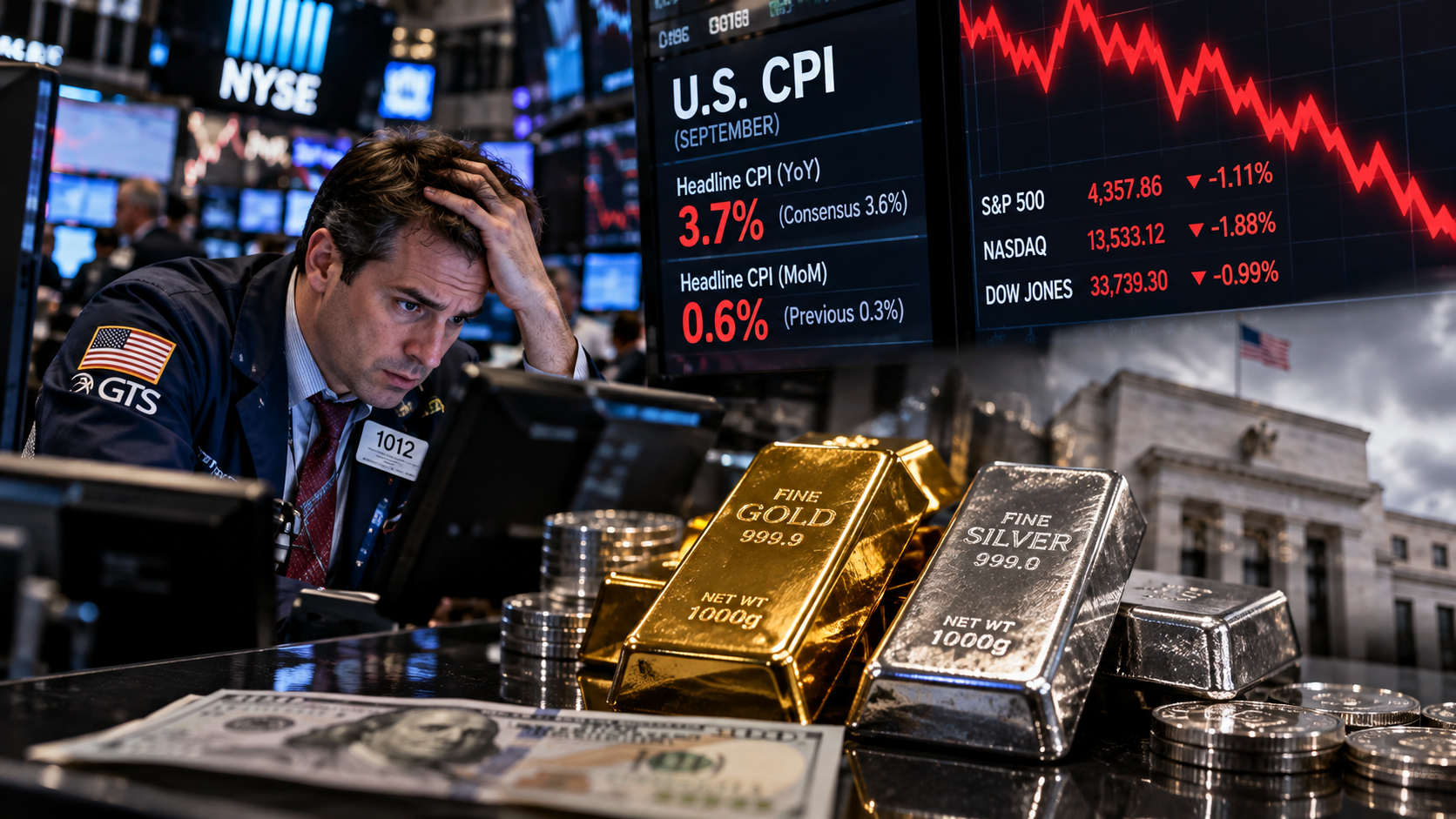
A synchronized selloff raises a difficult question: is this a temporary liquidity shock or the beginning of a deeper repricing? Here is a framework for equities, gold, silver—and investors holding physical bullion.
October 15, 2026 · Global Economy Charts · Analysis


A rare synchronized selloff
Stocks, gold and silver can fall together when investors reassess inflation, interest rates, the dollar and liquidity at the same time. Gold is not guaranteed to rise on every equity selloff, and silver is even more sensitive because it serves both as a monetary metal and an industrial input. The important question is whether the move reflects a temporary scramble for liquidity or a sustained repricing of inflation and growth expectations.

The CPI transmission mechanism
A hotter-than-expected inflation report can reduce expectations for Federal Reserve rate cuts. Higher expected policy rates may lift real bond yields and the dollar, creating pressure on non-yielding gold. Equities face a separate valuation problem: a higher discount rate reduces the present value of distant earnings, especially for highly priced growth stocks. Silver can suffer from both channels if tighter policy also threatens industrial activity.
Why the AI debate matters
The market is increasingly separating the long-term promise of artificial intelligence from the price and financing of that promise. Companies with durable cash flow, visible customer demand and disciplined capital expenditure are different from heavily indebted infrastructure projects that require exceptionally strong utilization to justify their valuations. An AI investment slowdown could weaken sentiment across technology shares without implying that AI itself has failed.

Gold: defensive over time, volatile in a crisis
Gold can benefit from long-run concerns about fiscal sustainability, geopolitical risks and reserve diversification. Yet in the first phase of a market shock it may be sold to raise cash, and a stronger dollar or higher real yields can overwhelm safe-haven demand. A more constructive signal would be stabilizing or falling real yields alongside a softer dollar; the opposite combination would argue for caution.
Silver: a hybrid asset with sharper swings
Silver is simultaneously a precious metal and an industrial commodity. Investment demand can follow gold, but demand from electronics, solar-related applications and manufacturing is exposed to the business cycle. This dual role helps explain why silver may fall harder than gold during growth scares and recover more sharply when financial conditions and industrial expectations improve. Neither outcome is automatic.

What changes for physical silver holders
Owning physical bars avoids futures margin calls and forced liquidation tied to leverage, provided the purchase was not debt-financed. The trade-off is lower liquidity and a potentially meaningful gap between retail purchase and dealer buyback prices. In Korea, VAT and dealer premiums may affect the original acquisition cost, while the resale price may not reimburse those amounts. A holder should therefore calculate break-even using the actual dealer buyback quote in Korean won—not merely the international spot price.

A practical plan for the next three months
Rather than making an all-or-nothing forecast, investors can watch US real yields, the dollar index, inflation releases, earnings revisions, credit spreads and the gold-to-silver ratio. For physical silver, establish a cash-reserve target and compare multiple dealer buyback quotes before considering any sale. Avoid assuming a rebound must occur on a particular date; the time horizon and need for liquidity should drive position size.

The bottom line
The base case is a period of elevated volatility rather than a confidently timed crash or recovery. Equities remain vulnerable if financing costs stay high while AI earnings expectations weaken. Gold may stabilize sooner if real yields retreat; silver could remain more volatile because industrial demand matters. For unleveraged physical-silver holders with no near-term cash need, reacting to a single session of selling is usually less useful than tracking the macro drivers and actual resale economics.
What to monitor next

Useful primary reference points: US Bureau of Labor Statistics CPI · BEA PCE Price Index · US Treasury real yields · Federal Reserve policy · LBMA metals price information.
For educational and informational purposes only. Not individualized investment advice. Market outcomes are uncertain, and physical precious metals involve spreads, storage, liquidity and other costs.
답글 남기기